“DON’T WANT YOUR LOVE ANYMORE” A BROKEN MAN MASKING HIS TEARS WITH A PAINTED SMILE THROUGH THE TRAGIC ADVERSITY OF PUBLIC HUMILIATION THE UNBELIEVABLE RESULT THAT STANDING TALL BECAME THE ULTIMATE ANTHEM OF DIGNITY
The year was 1960, and the world was changing, but nothing could have prepared us for the sound of that snapping snare drum and the soaring, mournful harmony that followed. When Cathy’s Clown by The Everly Brothers first hit the airwaves, it felt like a bolt of lightning straight to the soul. It wasn’t just a pop song; it was a legendary, unforgettable milestone that perfectly captured the stinging bite of embarrassment and the raw vulnerability of a heart on display.
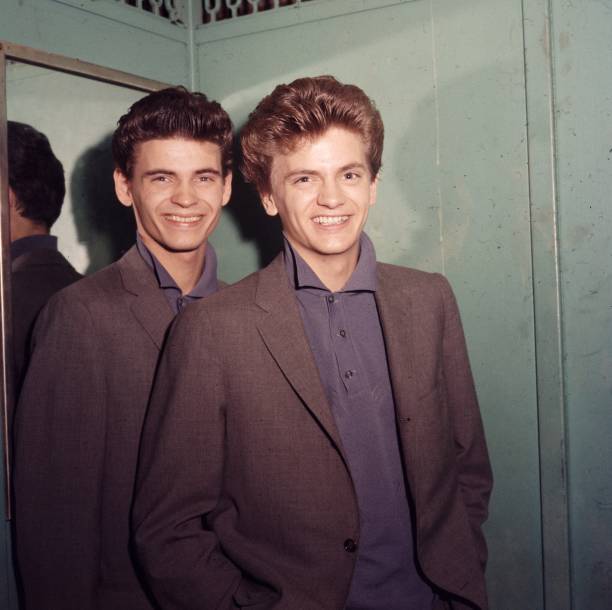
Don and Phil brought a unique, almost cinematic intensity to Cathy’s Clown, creating a sound that moved us to tears because it spoke a truth we were all too afraid to whisper. The Everly Brothers managed to turn a personal rejection into a universal experience, etching their voices into our collective memory as the definitive architects of heartbreak. For those of us who grew up with them, this song remains a haunting sanctuary for the misunderstood.
The melody of Cathy’s Clown by The Everly Brothers paints a vivid picture of a man standing in the shadows, watching the world laugh while he tries to maintain a shred of his pride. It evokes the image of a small-town carnival where the lights are too bright and the laughter feels a little too loud. As the song plays, it serves as a mirror for our own life journeys, reflecting the times we felt like the laughingstock of our own stories.
We remember the early days of our youth, perhaps in a crowded high school hallway or a local diner, where the fear of being “the clown” was a daily weight. The Everly Brothers captured that specific human experience of realizing that the person you adore is the very one making you look foolish. “I die each time I hear the sound,” they sing, and we feel that hollow ache of public shame all over again.
The real-life inspiration for Cathy’s Clown came from Don’s own experiences with a girl named Cathy, but the song quickly became a landscape for all of our shared histories. We’ve all navigated those turbulent waters—raising children, facing the lean winters of middle age, and realizing that the scars of our first heartbreaks never truly disappear. They just become part of the story we tell ourselves late at night.
Through the decades, the meaning of Cathy’s Clown by The Everly Brothers has shifted from a song of teenage angst to a testament of survival. We look at our partners—those who stood by us through the hardships—and realize that the “clown” was just a role we played before we found someone who truly saw our worth. The Everly Brothers gave us the courage to say, “I don’t want your love anymore,” and mean it.
There is a profound, hard-won beauty in the reality of time passing, especially when you look back at the people who didn’t appreciate the heart you offered. Growing old alongside a partner who treats you with dignity is the ultimate victory over the past. Cathy’s Clown by The Everly Brothers serves as a reminder that we were all fools once, but those experiences paved the way for the deep, resonant love we cherish today.
As we reach the silver years, the voices of Don and Phil remain a comforting presence, reminding us that we survived the ridicule and the tears. The emotional climax of Cathy’s Clown is the moment we realize we are no longer performing for anyone; we are simply existing in the peace we’ve built together. The Everly Brothers will always be the poets of our vulnerability, honoring the triumph of the spirit over shame.
Ultimately, Cathy’s Clown is about the elegance of walking away from a love that diminishes you. It encourages us to look at the person holding our hand and feel grateful for the stability and respect that replaced the chaos of our younger years. The Everly Brothers left us with a masterpiece that celebrates the end of the performance and the beginning of the truth.
Looking back at your own journey, can you recall a specific moment when you finally decided to stop being “the clown” for someone else and chose your own dignity instead?